Conference Room Calendar: Book Meetings Easily
Readers, have you ever found yourself scrambling to book a conference room for an important meeting, only to discover it's already taken? Or maybe you've spent countless hours coordinating schedules and sending emails back and forth, just to find a time that works for everyone? If you're tired of the hassle and inefficiency of traditional conference room booking, there's a better way. Conference room calendars, powered by technology, offer a streamlined and intuitive solution for managing your office space and booking meetings with ease.
I've been closely following the evolution of conference room calendars and have analyzed countless options and features. Throughout this blog post, we'll explore the intricacies of conference room calendars, delve into their benefits, and equip you with the knowledge to choose the perfect solution for your needs.
Understanding the Advantages of a Conference Room Calendar
Conference room calendars provide numerous advantages over traditional methods, making meeting scheduling a breeze. But what are these benefits, and how can they transform your meeting management process?
First and foremost, conference room calendars eliminate the need for manual booking processes. Imagine a world where you don't have to call the office manager or send out countless emails just to secure a room for a meeting. With a conference room calendar, you can effortlessly view available rooms, reserve them online, and receive instant confirmation.
Secondly, these calendars offer real-time visibility of room availability, ensuring that you're never caught off guard by a booked room. No more frustrating surprises when you arrive at the meeting only to find it's already in use. With real-time updates, you can make informed decisions about meeting locations and avoid scheduling conflicts.
Types of Conference Room Calendars: A Comprehensive Overview
Conference room calendars come in various forms, each with its own unique set of features and functionalities. To choose the right calendar for your organization, it's crucial to understand the different types available. Let's explore the most common options:
Traditional Whiteboard Calendars
While not as technologically advanced as other options, traditional whiteboard calendars remain a popular choice in some offices. These calendars typically consist of a large whiteboard mounted in a central location, where employees can write down meeting details, including dates, times, and room numbers.
While simple and cost-effective, whiteboard calendars have their limitations. They can be prone to errors, and updates need to be made manually, which can lead to inconsistencies and inaccuracies. The information available on these calendars is often restricted to basic details, and there's limited functionality for managing meeting attendees or resources.
Software-Based Digital Calendars
Digital conference room calendars, often integrated with popular office productivity tools, offer a more modern and efficient approach to meeting scheduling. These calendars provide a centralized platform for managing meeting bookings, room availability, and related information. Some common advantages include:
• Real-time updates: Digital calendars automatically reflect the latest room availability, eliminating the need for manual updates and ensuring that everyone has access to accurate information.
• Enhanced collaboration: These calendars enable seamless collaboration among team members. Users can easily invite colleagues, share meeting materials, and access meeting notes, all within a centralized platform.
• Integration with other tools: Many digital calendars integrate with other popular office tools, such as email clients, project management software, and video conferencing platforms, streamlining workflows and improving productivity.
Hardware-Based Interactive Calendars
Interactive conference room calendars, often featuring large touchscreen displays, provide a more immersive and user-friendly experience. These displays allow users to navigate through room availability, book meetings with ease, and even access meeting details through a simple touchscreen interface.
Interactive calendars offer several benefits, including:
• Intuitive interface: The touch-enabled interface makes scheduling meetings a breeze, allowing users to easily view available rooms, select a time slot, and book the room with just a few taps.
• Visual clarity: Interactive calendars typically display room availability in a clear calendar view, making it easy to identify available time slots and avoid scheduling conflicts.
• Enhanced accessibility: These calendars are often located in high-traffic areas, making it easy for employees to book rooms and access meeting information without having to navigate to separate systems.
Choosing the Right Conference Room Calendar for Your Needs
Selecting the appropriate conference room calendar system for your organization requires careful consideration of several factors. Here are some key aspects to keep in mind when making your decision:
Size and Structure of Your Organization
The size and structure of your organization will play a crucial role in determining the best type of conference room calendar. For small teams or departments, a simple whiteboard calendar or a basic digital calendar might suffice. However, large enterprises with multiple offices and complex meeting requirements may benefit from a more sophisticated system, such as an interactive display or a cloud-based platform.
Meeting Frequency and Complexity
Consider how often your employees book meetings and the complexity of those meetings. If most meetings are relatively simple and straightforward, a basic calendar system might be sufficient. However, if you frequently host large meetings with multiple attendees and complex resource requirements, a more robust solution with advanced features, such as resource scheduling, video conferencing capabilities, and integration with other tools, might be a better fit.
Budget and Technology Infrastructure
Every organization has a budget and a specific technology infrastructure. When choosing a conference room calendar system, it's important to consider the cost of the software, hardware, and any associated services. Make sure the system is compatible with your existing technology infrastructure and that you have the resources to implement and maintain it.
User Experience and Accessibility
For a conference room calendar to be successful, it needs to be user-friendly and accessible to all employees. Consider features like ease of use, intuitive navigation, and the ability to access the system from different devices, such as desktops, laptops, tablets, and mobile phones.
Popular Conference Room Calendar Software and Platforms
There are numerous conference room calendar software and platforms available, each with its own strengths and weaknesses. Let's explore some of the most popular options:
Google Calendar
Google Calendar is a popular choice for many organizations due to its simplicity, ease of use, and integration with other Google services. Google Calendar allows users to book conference rooms, set meeting reminders, and access meeting details from their desktops, laptops, tablets, or smartphones.
Microsoft Outlook
Microsoft Outlook, another popular choice for office productivity, offers a built-in conference room booking feature. Outlook users can easily book conference rooms, manage meeting attendees, and access meeting notes, all within the familiar Outlook interface.
Zoom
Zoom, a leading video conferencing platform, has incorporated conference room booking capabilities into its platform. Zoom users can now book conference rooms directly from the Zoom interface, making it easier to schedule meetings and connect with colleagues remotely.
Robin
Robin is a specialized conference room booking platform that offers advanced features, such as automated room scheduling, resource management, and integration with other office tools. Robin is designed to streamline meeting processes, improve room utilization, and provide real-time insights into meeting data.
OfficeRnD
OfficeRnD, a comprehensive workplace management platform, includes a robust conference room booking module. The platform's features allow users to book rooms, manage meeting attendees, access meeting notes, and integrate with other office systems, such as access control and visitor management.
Tips for Maximizing the Effectiveness of Your Conference Room Calendar
Once you've chosen the right conference room calendar system for your organization, there are several best practices that you can implement to maximize its effectiveness:
Establish Clear Booking Policies
To ensure fair and efficient use of conference rooms, it's important to establish clear booking policies. These policies should cover aspects such as booking time limits, reservation cancellations, and the proper use of meeting spaces.
Promote the Use of the Calendar
Make sure that all employees are aware of the conference room calendar system and how to use it effectively. Provide training sessions, create user guides, and encourage employees to use the calendar for all their meeting bookings.
Encourage Regular Maintenance
Regularly review and update the conference room calendar system to ensure that it's functioning properly and meeting the needs of your organization. This includes updating room availability, ensuring that all bookings are accurate, and addressing any technical issues that might arise.
Track and Analyze Room Utilization Data
Most conference room calendar systems provide data on room utilization. Track this data to identify patterns and areas for improvement. For example, you might notice that certain rooms are consistently underutilized while others are always booked, indicating that your meeting space planning might need adjustments.
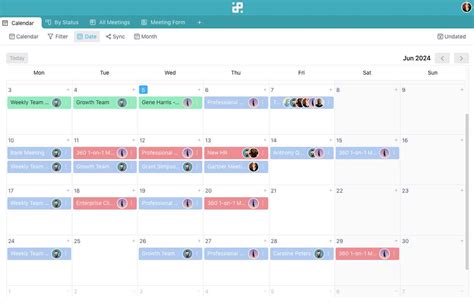
To truly unlock the potential of your conference room calendar, it's essential to go beyond basic scheduling and implement optimization strategies that enhance efficiency and minimize waste.
Implement Automated Scheduling
Automated scheduling features, available in many conference room calendar systems, can save you time and effort by automatically booking rooms based on pre-defined criteria. For example, you can set up rules that automatically book the largest available room for large meetings or prioritize bookings based on meeting importance or attendee seniority.
Optimize Room Capacity
Ensure that your meeting rooms are appropriately sized to accommodate the number of attendees. Overbooking small rooms can lead to discomfort and distractions, while underutilizing large rooms is a waste of space and resources. Review room capacity regularly and make adjustments as needed.
Leverage Resource Scheduling
Many conference room calendar systems offer resource scheduling capabilities, allowing you to reserve equipment and resources alongside meeting rooms. This feature ensures that everything you need for your meeting is readily available, from projectors and whiteboards to video conferencing systems.
Integrate with Video Conferencing Platforms
Seamless integration with video conferencing platforms allows for efficient hybrid meetings, where some participants join remotely while others are present in the conference room. This feature enhances flexibility and accessibility, making it easier for employees to participate in meetings regardless of their location.
FAQ Section
What are the best practices for using a conference room calendar?
To maximize the effectiveness of your conference room calendar, establish clear booking policies, promote its use among employees, encourage regular maintenance, and track and analyze room utilization data.
How can I optimize my conference room calendar for efficiency?
Implement automated scheduling, optimize room capacity, leverage resource scheduling, and integrate with video conferencing platforms to enhance efficiency and minimize waste.
What are the benefits of using a conference room calendar?
Conference room calendars provide numerous benefits, including eliminating manual booking processes, offering real-time visibility of room availability, enhancing collaboration among team members, and integrating with other office tools.
Conclusion
In conclusion, a well-implemented conference room calendar can revolutionize meeting management in your organization. By embracing technology and adopting the best practices outlined in this article, you can streamline meeting scheduling, enhance collaboration, and optimize room utilization. So, ditch the outdated methods and embrace the efficiency and convenience of a modern conference room calendar system. And if you're looking for more insights into meeting management, check out other informative articles on our blog. Happy meeting!